Root, not trunk
Briar is the burl of Erica arborea — a hard, heat-tolerant root that pipe makers have used for more than a century. Levon Asikyan works first with excellent Algerian blocks from a trusted cutter, and with Italian briar when the shape asks for it. The wood is not a blank to be stamped into a catalogue number. He looks for the pipe already living in the plateau before he draws a line.
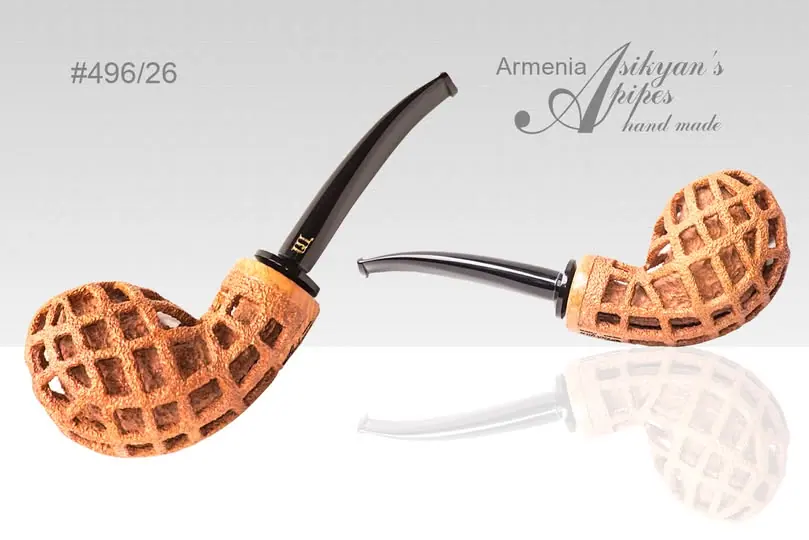
What the grain decides
Straight grain and birdseye that will take a stain stay smooth. A block whose rings will not carry a polish is rusticated by hand or blasted so the landscape can speak. That choice is made at the bench in Yerevan, after the chamber and the airway have been drilled — engineering first, then the surface.
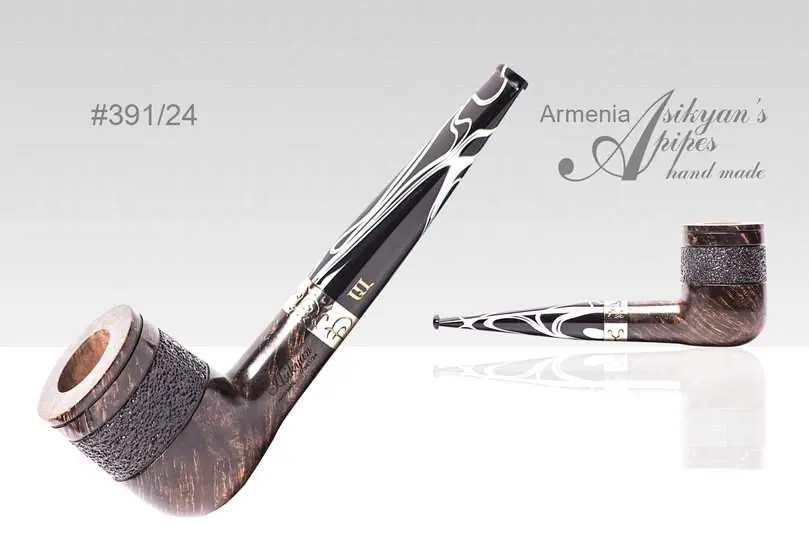
Why the source matters
Algerian root is dense and even; Italian stock can be larger or more dramatic in the grain. Neither is a slogan. Pipedia records the same habit: the block is chosen for the silhouette waiting inside. A billiard that stays slim, a freehand whose cage is carved from one piece — both begin as a reading of wood, not as a mould.