Notes
Articles
Differences that matter at the bench: the block, the stamp, the finish, and the silhouettes in the cabinet. Every plate is a pipe Levon made.
Articles on Asikyan pipes
Material
Algerian briar, and how Levon reads a block
Why Asikyan pipes start with Algerian briar — sometimes Italian — and how the shape is chosen from the wood, not forced onto it.
The mark
How to read an Asikyan serial
The stamp reads Armenia · Asikyan · Hand Made, then the serial. The first three digits are the count; the last two are the year. From 116/21 the stem also carries AL.
Finish
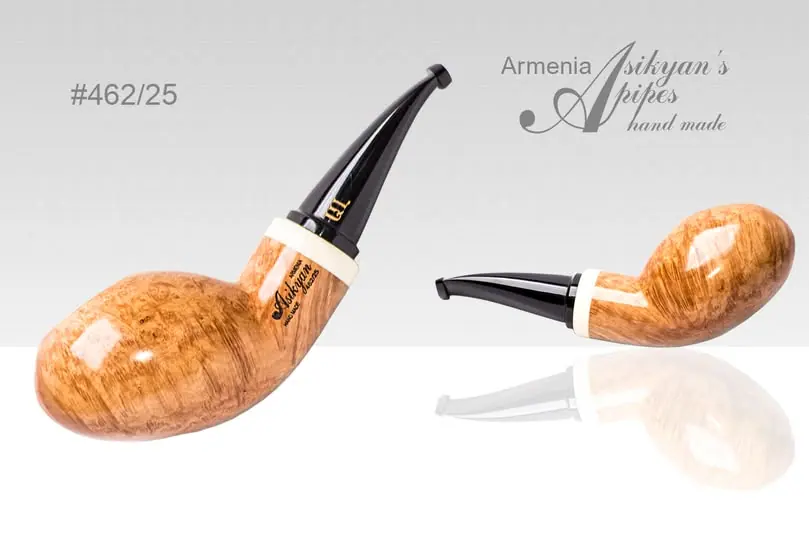
The smooth finish: when the grain is left to speak
Levon Asikyan leaves a pipe smooth when birdseye or straight grain is worth keeping. Stain in thin passes, a quiet sheen — never a plastic gloss.
Finish
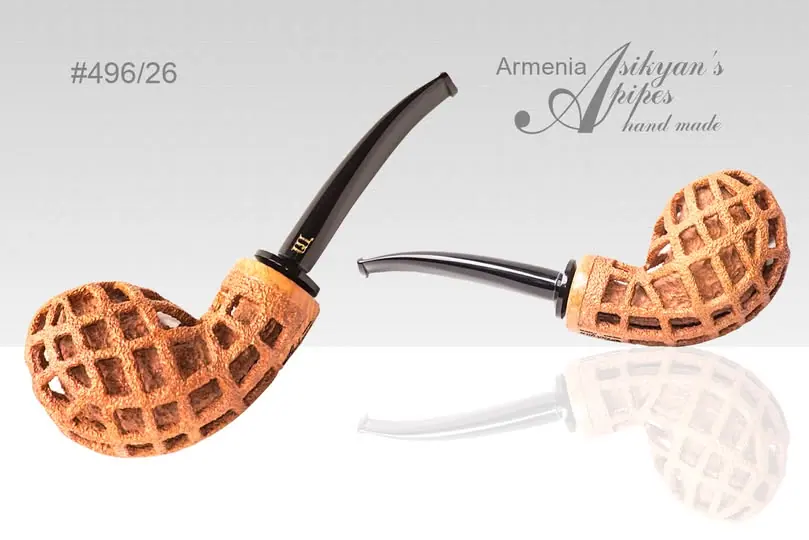
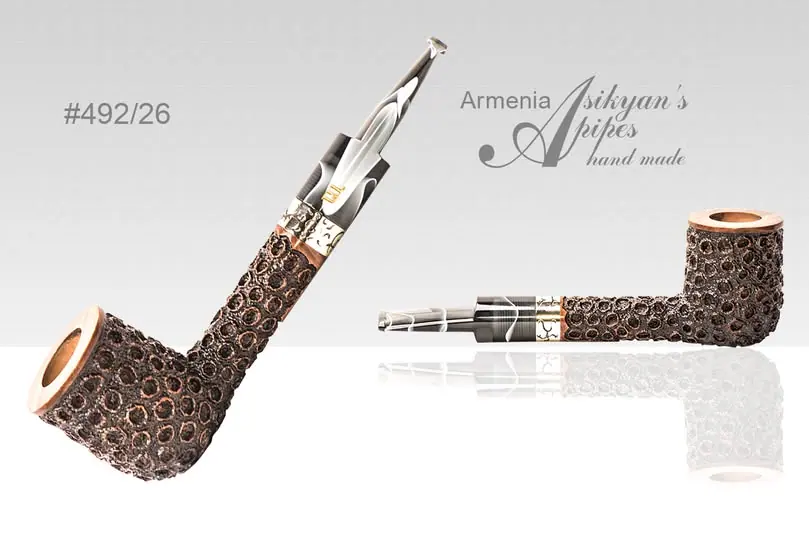
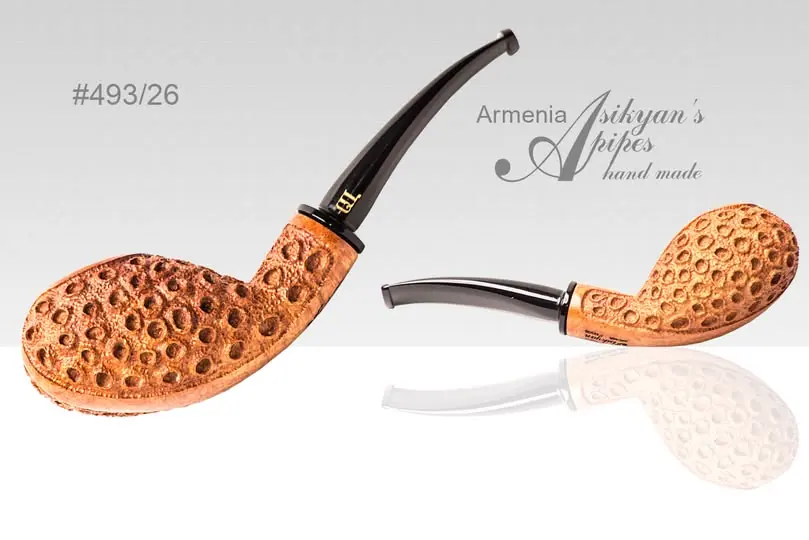
Rustication and art carving, cut by hand
Asikyan rustication is cut, not pressed — honeycomb, craters, dragon scale, lattice. A surface closer to jewelry than to camouflage.

Finish
Partial rustication and sandblast
Smooth panels against rusticated flanks, or a blast that follows the ring grain. How Levon Asikyan uses contrast without losing the silhouette.

Shape
Billiard, Lovat, and Liverpool — the straight family
How a classic billiard differs from a Lovat and a Liverpool in Levon Asikyan’s cabinet: shank length, saddle stem, and Danish slimness.
Shape
Apple, bent apple, and the round bowl
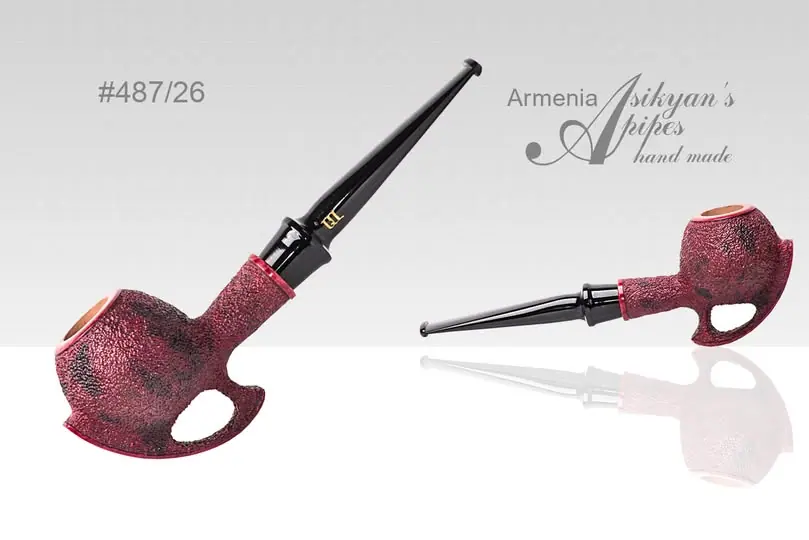
The apple is a rounded bowl on a straight or bent shank. How Asikyan’s apples, including pierced-heel pieces, differ from a billiard.
Shape
The ukulele: a squat bowl Levon returns to
Ukulele pipes in the Asikyan cabinet — pale, indigo, burgundy, smooth or cratered. A short, wide bowl with a bent shank, made one by one in Yerevan.
Shape
Freehand and double-wall lattice pipes
Asikyan freehands are not leftovers. Lattice and basket-weave double walls keep the cage and the chamber distinct — sculpture with a drilled airway.

Shape
Bulldog, Rhodesian, bullcap, and bullmoose
The diamond-shank family in Levon Asikyan’s work: bulldog, Rhodesian, bullcap, and bullmoose — how the bowl and the shank change.
Shape
Brandy and egg: tapered bowls, bent and straight
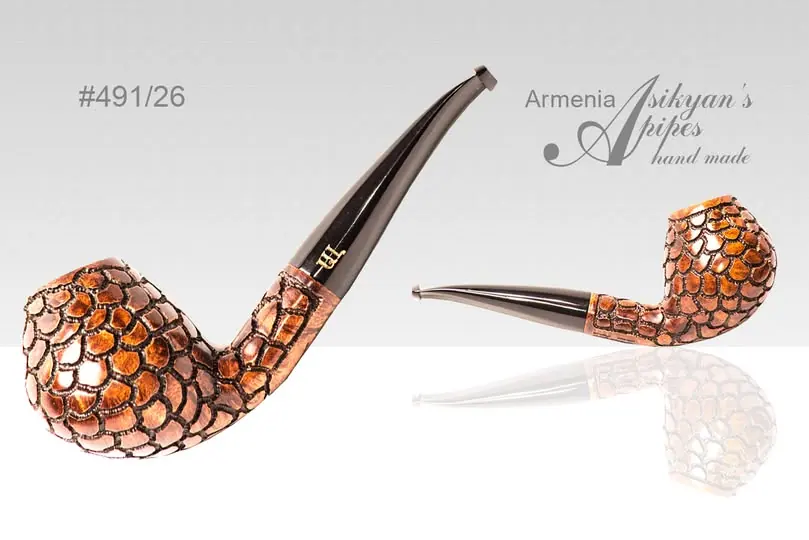
Bent brandy and egg shapes in the Asikyan cabinet — how a tapered bowl differs from an apple or a billiard, with plates from 2026 and 2024.
Shape
Dublin, acorn, tomato, and eskimo
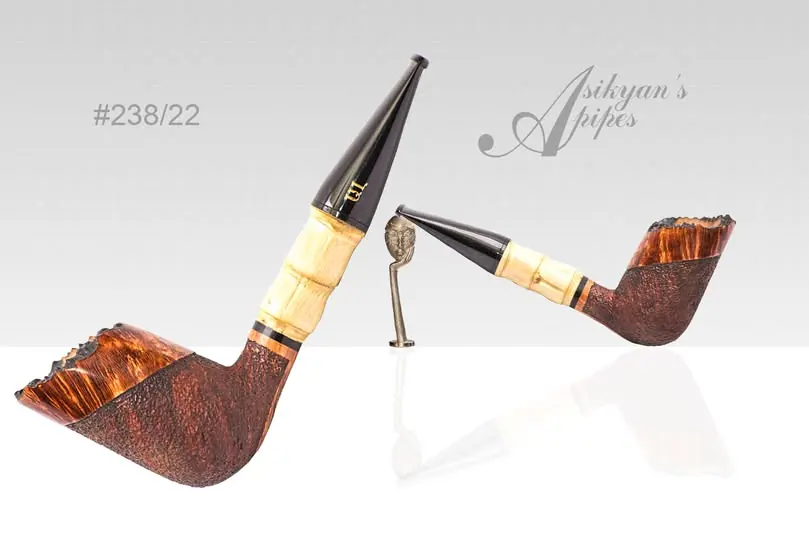
Four more Asikyan silhouettes: the flared Dublin, the acorn, the flattened tomato, and the wide eskimo — what changes in the bowl.
Materials
Stems, Cumberland, and the jeweler’s band
Asikyan stems are cut in the atelier — ebonite as a rule, Cumberland or acrylic when needed. Silver and brass bands may carry Armenian petroglyphs.
Shape
Reverse calabash: a cooling chamber in the briar
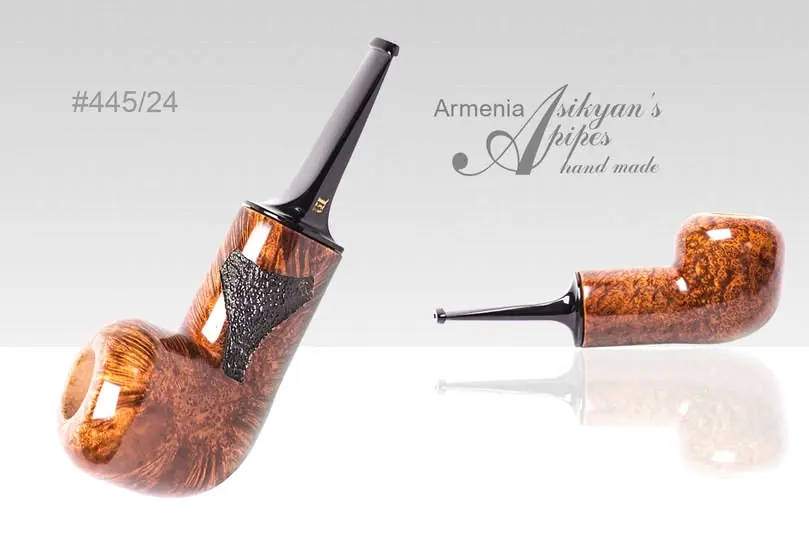
What a reverse-calabash Asikyan pipe is — an extra chamber in the wood to cool the smoke — with the 445/24 plate from the archive.