Where the name comes from
Ukulele is not a Dunhill Group and not a Jura factory stencil. Artisan makers — especially in Eastern Europe and among Danish-influenced benches — use it for a squat, wide bowl on a usually bent shank: a compact smoker with more chamber than its length suggests. The instrument is the joke, the way “bulldog” is. There is no nineteenth-century inventor to name. Levon uses the word the same way on Facebook and eBay: a family he returns to, not a mould.
The specification
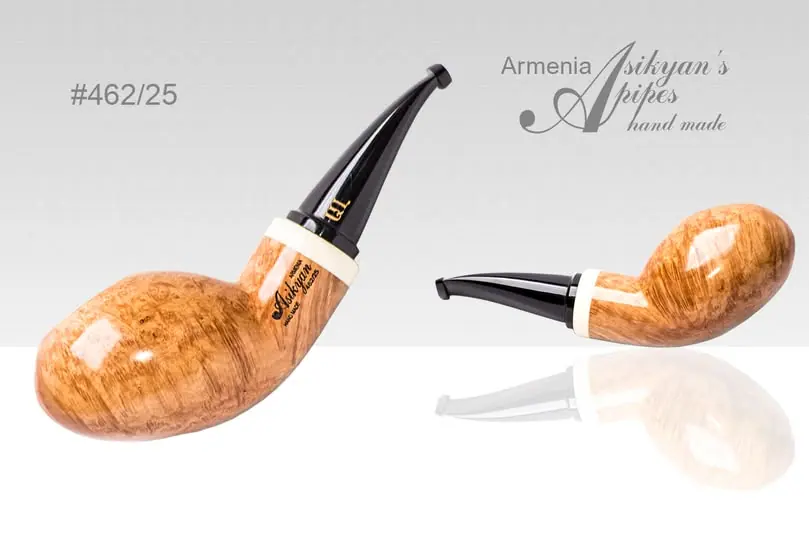
Bowl: short, wide, more height than a tomato, less sphere than an apple. Shank: usually bent. Stem: cut to the pipe. None of the four ukuleles in the cabinet carries a millimetre card, so we do not invent length or weight. 462/25 is also a reverse-calabash ukulele — a cooling chamber in the wood, gold birdseye, ivory-tone ring — which is a specification of the airway, not of the outline.
Four plates
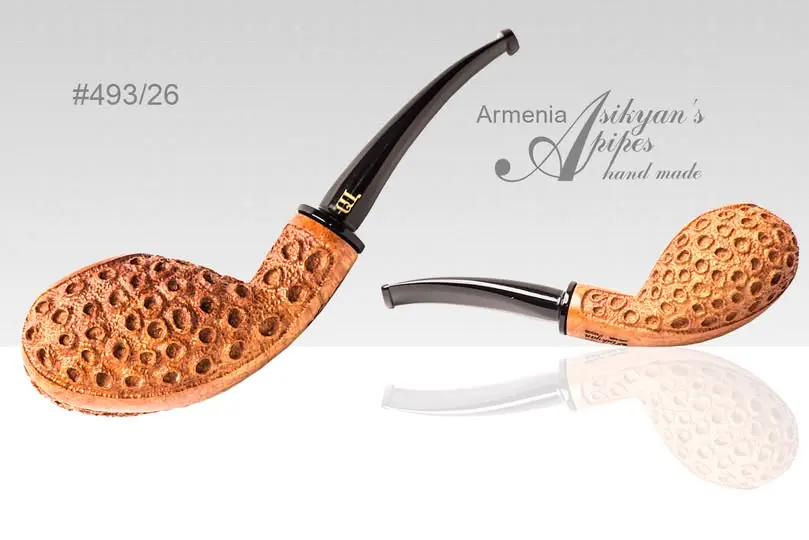
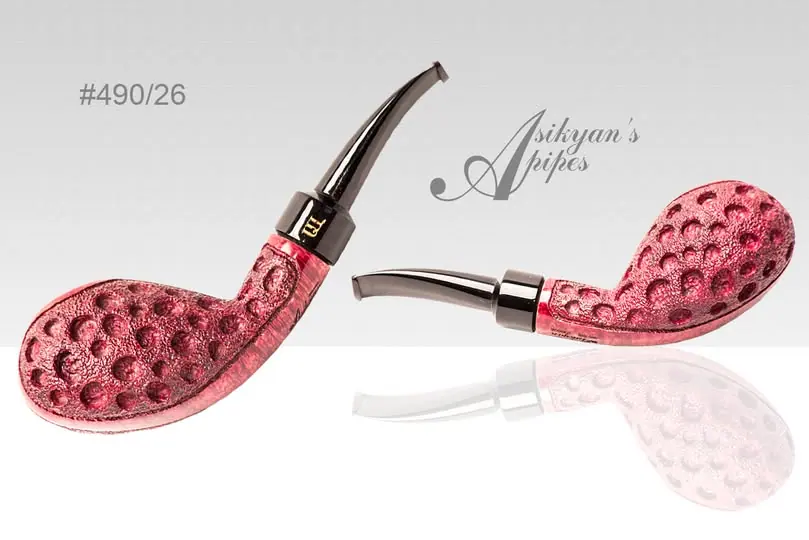
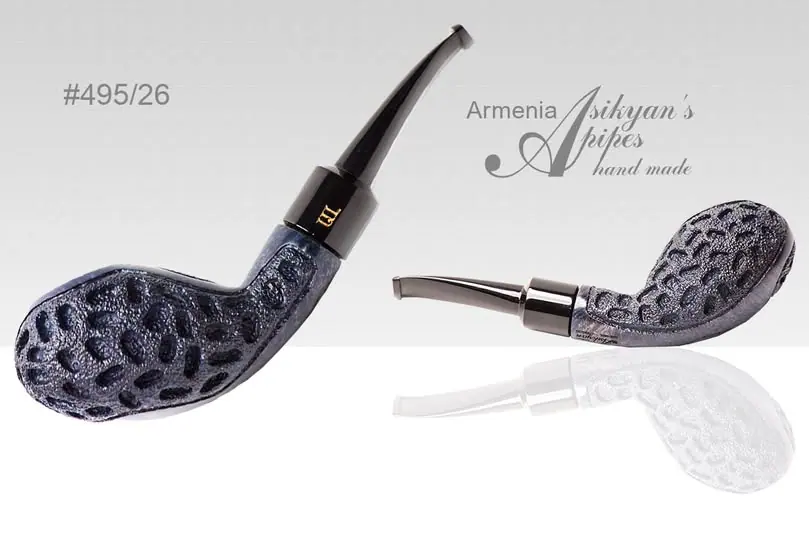
493/26 is pale, cratered, art-carved, in stock when listed. 490/26 is the burgundy sister. 495/26 is indigo, 2026 archive. 462/25 is smooth. Same silhouette, four surfaces. The stamp is Armenia · Asikyan · Hand Made.
Next to a tomato or an apple
A tomato is flatter. An apple is rounder on a longer shank. The ukulele sits between them. If you want a short pipe that does not feel like a nose-warmer, this is the Asikyan shape to name first.