Where it comes from
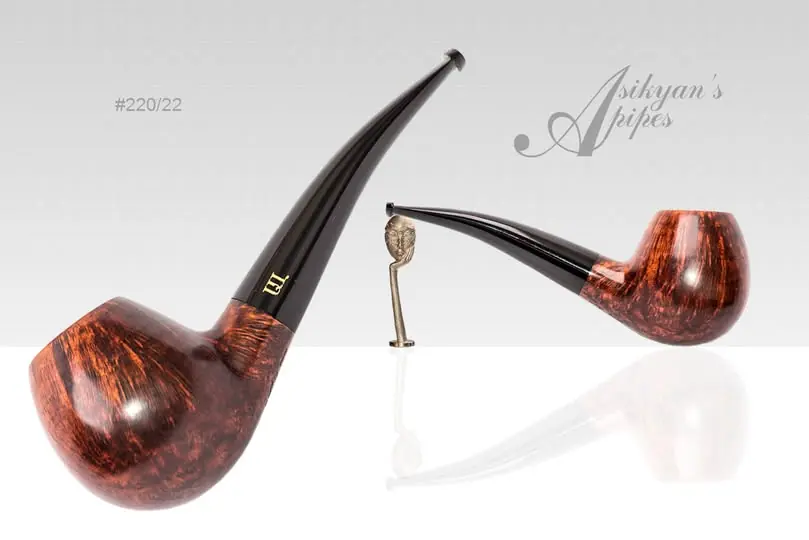
The brandy, or brandyglass, takes its outline from the drinking glass: wide at the waist, tighter at the rim. Mid-century catalogues in France and England used the name; Danish makers after the war made the taper slimmer and the bend more graceful. It is not an apple (too spherical) and not a billiard (too cylindrical). Nobody in Saint-Claude “invented” it in a single year. It is a bowl people already knew from the table, cut in briar.
The specification
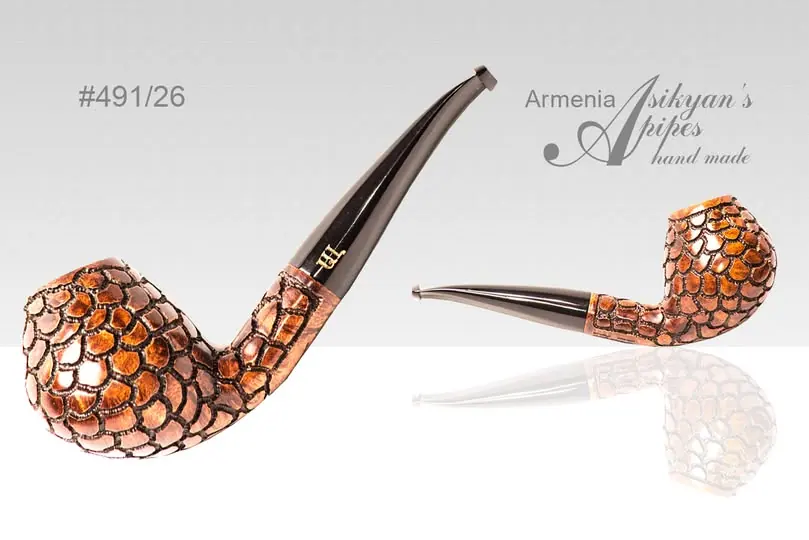
Bowl: tapers toward the rim; the heel is fuller than a billiard. Shank: on Levon’s plates, usually bent. Stem: cut to the curve. Chamber still has to be even — the taper is the outside. None of the four brandies in the cabinet (491/26, 494/26, 364/23, 220/22) carries a millimetre card, so we do not invent length or weight.
Four years of the same bowl
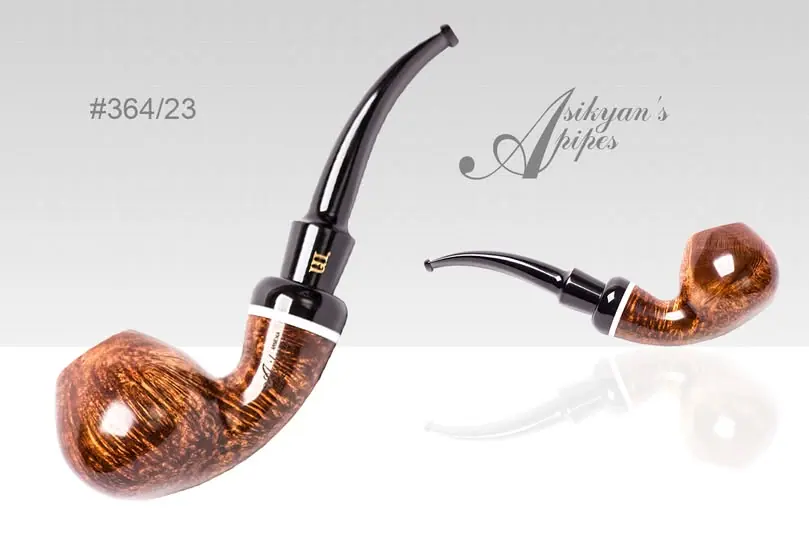
491/26 is dragon-scale rustication and a gold stem mark, in stock when listed. 494/26 is a crimson rusticated sister from the 2026 archive. 364/23 is amber gloss with a thin white ring. 220/22 is flame grain and a long stem. The stamp does not change. The surface does.