Never from a tray
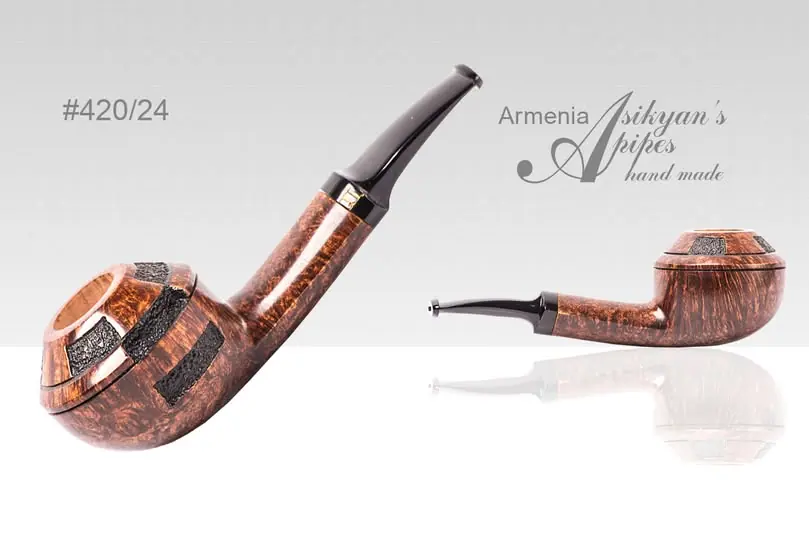
Every mouthpiece is cut by hand to the pipe it belongs to. Ebonite is the rule: it polishes, it is kind to the teeth, it can take the AL inlay. Cumberland — the striated rod — appears when the composition wants another voice. Colored acrylic is rarer, used the same way: as a chosen stem, not a leftover.
Metal on the shank
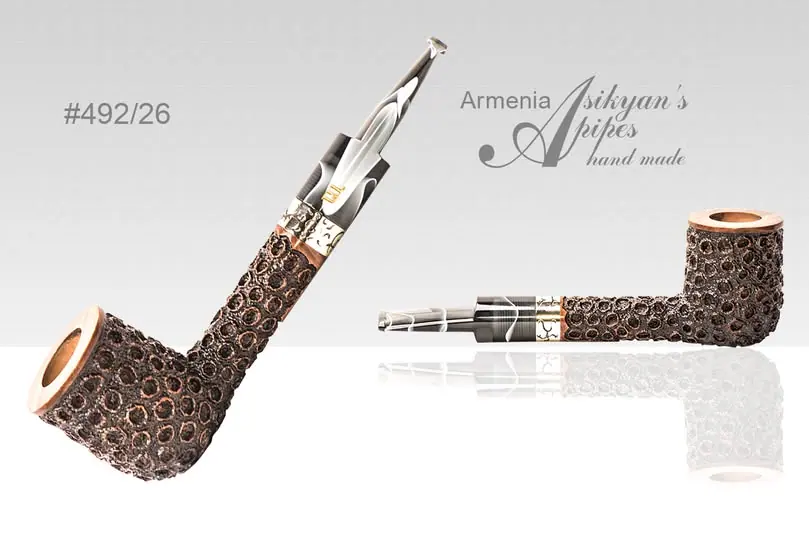
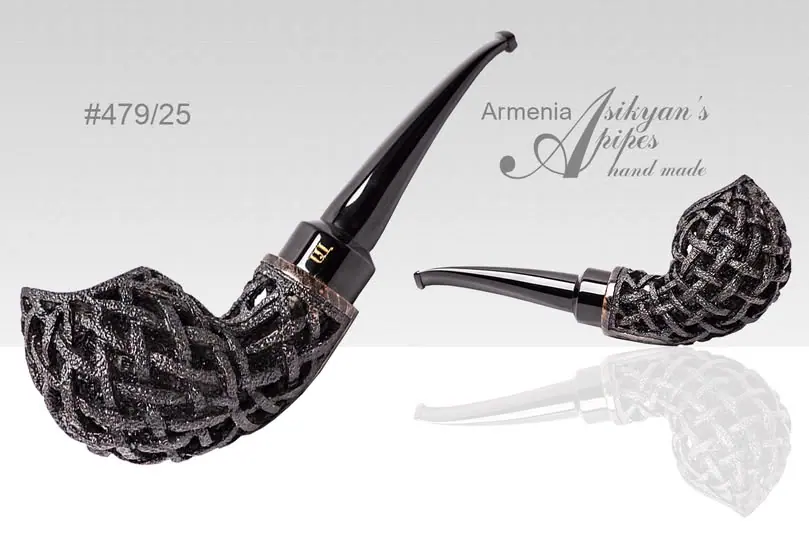
Silver or brass bands are a jeweler’s work. Lovat 492/26 carries an engraved band at the bit. Freehand 479/25 has a bronze ferrule. Bullmoose 420/24 shows a brass band on the 2024 plate. Some bands take Armenian petroglyphs. Jewelry still pays for the tools; the same bench sets the metal on the pipe.
What to ask for
If you commission a piece, say whether you want a quiet black ebonite, a Cumberland rod, or a band. The drilling will stay an engineer’s job. The stem and the metal are where the jeweler is allowed to speak.